How Seedance 2.0 Achieves Perfect Audio and Video Sync
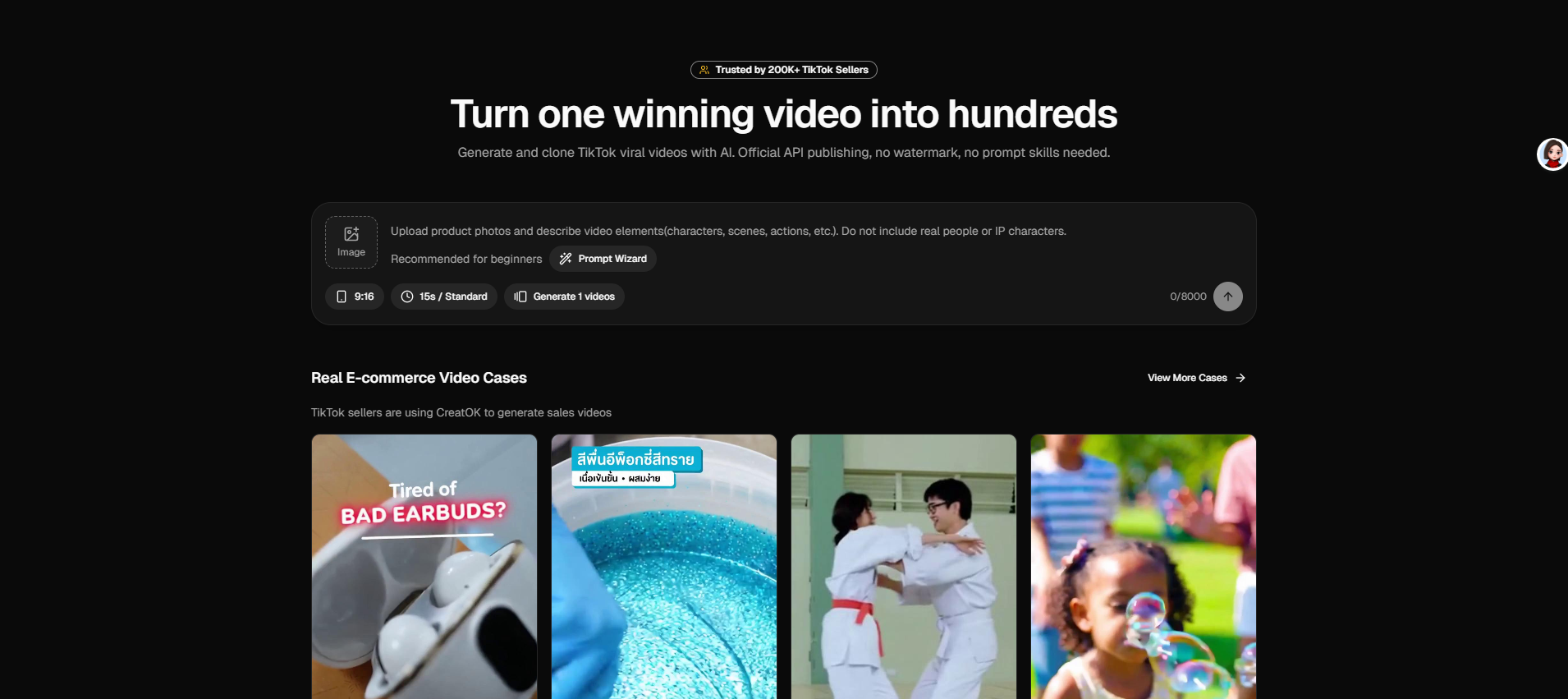
You experience unmatched audio and video sync with Seedance 2.0’s unified multimodal architecture. This platform stands out by allowing you to upload audio files directly. You control mood and beat with precision. You replicate full motion and camera movements using video references. Other solutions like Kling, Veo, and Sora cannot match this level of rhythm and visual style control. Seedance 2 audio sync explained shows why perfect sync matters for your creative and professional projects.
Direct audio uploads let you fine-tune mood and beats.
Video references help you match motion and camera angles exactly.
Full integration gives you control over style and rhythm.
Key Takeaways
Seedance 2.0 allows direct audio uploads, giving you precise control over mood and rhythm in your videos.
The unified multimodal architecture ensures audio and video are processed together, eliminating sync issues and enhancing quality.
Utilize high-quality inputs and clear organization to achieve the best synchronization results in your projects.
Advanced features like dual-branch diffusion transformer technology provide seamless audio-visual alignment, saving you time and effort.
Seedance 2.0 supports various input formats, making it versatile for different creative projects, from marketing videos to educational content.
Seedance 2 Audio Sync Explained

Multimodal Architecture
You benefit from Seedance 2.0’s unified multimodal audio-video joint generation framework. This architecture lets you synchronize audio and video at the same time. You do not have to worry about mismatched lips or awkward timing. The system uses world knowledge and a sparse structure to make processing efficient. You get high-quality and controllable audio-video generation. Seedance 2 audio sync explained shows you how this approach improves alignment between sound and visuals.
You can see the difference between Seedance 2.0 and traditional methods in the table below:
Feature | Seedance 2.0 | Traditional Methods |
|---|---|---|
Audio-Visual Handling | Unified simultaneous processing | Sequential: visuals first, audio later |
Synchronization Issues | Minimizes 'uncanny valley' effects | Often leads to synchronization issues |
Training Approach | Joint training on audio and visual | Separate training for audio and visuals |
You notice that Seedance 2 audio sync explained gives you a smoother experience. You avoid the common problems that happen when audio and video are handled separately.
Diffusion Transformer Technology
Seedance 2.0 uses a dual-branch diffusion transformer structure. You get audio and video generated at the same time. This technology ensures tight synchronization. You do not have to fix delays after the video is made. You save time and get better results.
The table below explains how diffusion transformer technology works for you:
Feature | Description |
|---|---|
Architecture | Dual-branch diffusion transformer structure |
Functionality | Simultaneous generation of audio and video |
Benefit | Ensures tighter synchronization between visuals and audio, avoiding post-processing delays. |
You see that Seedance 2 audio sync explained gives you seamless output. You can create videos with dialogue and sound effects that match the visuals perfectly.
Studies compare generative methods like video diffusion and transformer models against 3D scene synthesis. Researchers look at data sources, such as video corpora and panoramas. They analyze sensor integration, including reference video input and camera captures. AI techniques highlight native audio-visual co-generation and physics-based modeling. Seedance 2.0 stands out for precise control and fidelity in short video clips.
Native Audio-Visual Co-Generation
You experience frame-accurate synchronization with Seedance 2.0’s native audio-visual co-generation. The system generates speech, ambient sounds, and action noises that match the visuals. You do not need extra sound effects or dubbing after the video is made.
Capability | Description |
|---|---|
Dialogue Generation | Supports multi-language speech generation with precise lip-sync. |
Ambient Sound Effects | Automatically generates sounds that match the visuals. |
Sound Effect Sync | Action sounds are synchronized with visual movement. |
No Post-Production | Eliminates the need for separate sound effects and dubbing. |
Seedance 2 audio sync explained helps you create videos in many languages with accurate lip-sync. You can upload multiple files for one generation. You get improved realism in object movement and interaction. Users call Seedance 2.0 “next level” and “the best AI video model on the market right now.” They praise its ability to handle native audio generation synced to visuals. You can tell stories with multiple shots and enjoy lip-sync in over eight languages.
You get a better viewing experience because sound is generated alongside video. You can create complex stories and believable outputs.
Step-by-Step Sync Process
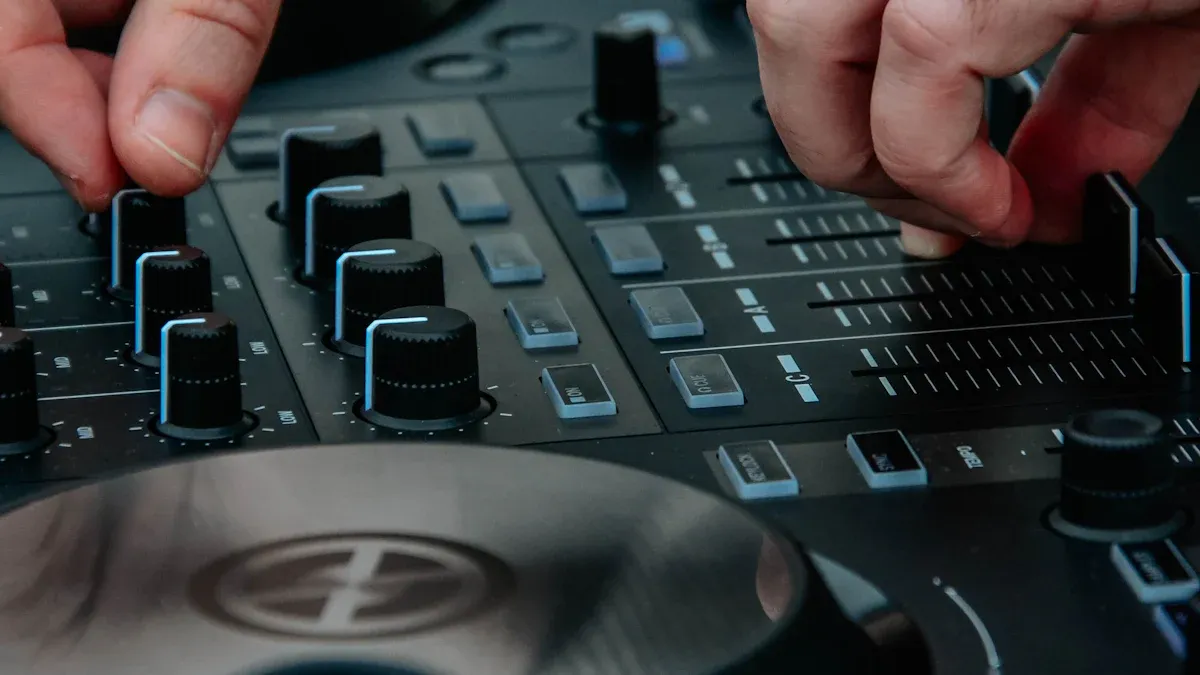
Input Handling
You start by choosing the input formats that Seedance 2.0 supports. You can upload images, videos, audio, or text. The system accepts these formats and prepares them for processing.
Supported Input Formats |
|---|
Images |
Videos |
Audio |
Text |
Seedance 2.0 analyzes each input type in a unique way. You see the system interpret text to build the story. Images guide the look and feel of the scene. Videos help the AI study motion and pacing. Audio sets the tone and rhythm. This careful handling ensures that every element fits together.
Input Type | Processing Method | Purpose in Synchronization Accuracy |
|---|---|---|
Text | Interpreted through a language-based encoder to extract semantic meaning | Ensures narrative structure aligns with visual and audio inputs |
Images | Converted into visual feature representations guiding character and scene details | Helps maintain visual consistency with audio and other inputs |
Video | Encoded as spatiotemporal tokens to study motion patterns and pacing | Aligns movement and timing with audio for synchronization |
Audio | Transformed into waveform or spectrogram embeddings to guide tone and rhythm | Ensures audio matches the visual and narrative flow |
You benefit from this process because Seedance 2 audio sync explained shows how the system keeps everything in sync from the start.
Timestamp Alignment
You watch Seedance 2.0 align timestamps for each input. The Dual-Branch Diffusion Transformer architecture generates audio and video at the same time. This method keeps sound effects and ambient audio matched to the scene. You do not need to fix timing issues later.
Sound effects match actions on screen.
Ambient audio fits the mood and timing.
You get a natural flow in your project. The system eliminates mismatches and delays.
Lip-Sync and Rhythm Matching
You notice that Seedance 2.0 uses advanced audio generation techniques. The AI aligns dialogue, rhythm, and sound effects with movements on screen. You see accurate lip-sync for speech and music. The system captures micro-expressions and emotional delivery.
Sound effects and background music align with video.
Mandarin lip-sync shows high accuracy, including micro-expressions.
Character movements match the rhythm of music.
You achieve professional results because the model synchronizes every detail. You can create videos with perfect lip-sync and rhythm matching. Seedance 2 audio sync explained helps you understand how Seedance 2.0 delivers this level of precision.
Best Practices
Input Quality
You achieve the best results in Seedance 2.0 when you focus on input quality. Clear organization helps you avoid confusion. You state the purpose for each input and keep references separate. You build a reference hierarchy by choosing primary, secondary, and tertiary assets. You use effective prompts with specific actions and clear tags. You refine your clips by adjusting elements and extending promising sections. You reference timestamps and describe synchronization levels for audio.
Organize your inputs clearly.
Structure references in a hierarchy.
Write prompts with action descriptions and tags.
Refine clips iteratively.
Reference timestamps for audio sync.
You prepare high-quality images with consistent details. You upload and tag assets in the Seedance library. You use explicit syntax in prompts and keep clip lengths manageable. These steps help Seedance 2.0 synchronize audio and video perfectly. Context-aware sound effects align with actions on screen. Lip-sync dialogue matches character voiceovers. Music beats synchronize with rhythm-driven content, making your videos more engaging.
Prepare reference images with consistent details.
Tag assets appropriately.
Use clear syntax in prompts.
Maintain clip length for control.
Avoiding Latency
You reduce latency by using smart strategies. Seedance 2.0 uses reinforcement learning to reward good process and outcomes. This method lowers latency by over 20% and improves quality. Automatic hyperparameter tuning adjusts settings based on speech clarity. This keeps latency low during fluent speech. Intelligent content waiting delays interpretation for unclear speech, ensuring accuracy.
Strategy | Description |
|---|---|
Reinforcement Learning | Rewards process and outcome, reducing latency by over 20% and improving quality. |
Automatic Hyperparameter Tuning | Adjusts parameters for speech clarity, minimizing latency during fluent speech. |
Intelligent Content Waiting | Delays interpretation for unclear speech, managing latency and ensuring accuracy. |
Troubleshooting Sync
You solve sync issues by checking your inputs first. You review your reference hierarchy and tags. You make sure your audio files have clear timestamps. You adjust prompts if you notice mismatches. You extend or trim clips to improve alignment. You test your project with short clips before finalizing. You use Seedance 2.0’s preview features to catch errors early.
Tip: Always review your inputs and tags before generating your final video. Small changes can fix sync problems quickly.
Use Cases
Video Production
You can use Seedance 2.0 to transform your video production workflow. The platform helps you create content quickly and with high quality. Many professionals use it for different types of projects:
Produce social media and marketing videos fast. You can turn a product launch idea into many assets for different platforms.
Tell brand stories and make ads. You can prototype and produce promotional videos with multiple shots.
Make educational and explainer videos. You can use text-to-video AI to explain complex topics in a simple way.
Visualize film scenes. You can generate moving storyboards for movies and short films.
Prototype concepts quickly. You can turn your ideas into video drafts for fast feedback.
You do not need a big team or expensive tools. Fashion brands create lookbook videos without hiring professionals. Fitness influencers make workout videos with perfect sync. Small businesses produce product videos at a lower cost. Seedance 2.0 speeds up your workflow by 30% compared to older versions. You can make more videos in less time and get faster client approvals.
Live Streaming
You can improve your live streaming with Seedance 2.0’s advanced sync features. The system uses a Dual-Branch Diffusion Transformer to keep audio and video in sync. You get a higher rate of usable clips—over 90% compared to just 20% before. The platform understands how sounds match visuals, like footsteps matching shoes on the floor.
Feature | Description |
|---|---|
Architecture | Dual-Branch Diffusion Transformer (Dual-Branch DiT) |
Sync Method | Native audio-visual synchronization through simultaneous training |
Usable Clip Rate | Increases from 20% to over 90% |
Relationship Awareness | Recognizes connection between sound and visual actions |
You can stream with confidence, knowing your audio and video will match every time.
Remote Collaboration
You can work with your team from anywhere using Seedance 2.0. The platform supports up to 12 reference assets, including images, videos, audio, and text. You get cinematic-quality output that looks real. The system produces smooth motion and synchronized audio. You can export videos in 2K resolution for a professional look.
Feature | Description |
|---|---|
Cinematic-quality output | Videos look nearly indistinguishable from real footage |
Enhanced motion/audio | Smoother motion and perfectly synced audio |
Input versatility | Accepts up to 12 reference assets for flexible content creation |
AI-generated video/audio | Produces both video and audio together, streamlining your workflow |
You can create a music video in minutes without editing. You can turn a single photo and a sentence into a multi-shot commercial. Teachers use Seedance 2.0 to make animated explainers that engage students. You can also make creative projects like manga-style dramas or action shorts, all with perfect sync.
You gain powerful tools with Seedance 2.0’s advanced sync technology. Your videos show perfect audio and visual alignment, which improves storytelling and professionalism. You can use features like real-time communication, quad-modal input, and director mode for creative control.
Feature | Description |
|---|---|
Dual-Branch Architecture | Generates video and audio together for real-time sync |
Quad-Modal Input System | Supports text, images, audio, and video |
Director Mode | Controls camera angles and lighting |
To maximize your results, follow these steps:
Plan your content and set clear goals.
Use automated suggestions, but add your own creative edits.
Keep visual themes consistent.
Try new editing techniques.
Review your videos to improve future projects.
You can access Seedance 2.0 through providers like laozhang.ai, Kie AI, and Atlas Cloud. These platforms offer guides, instant API keys, and flexible pricing. You find support and resources to help you succeed.
FAQ
How does Seedance 2.0 keep audio and video in sync?
You upload your audio and video files. Seedance 2.0 uses a unified multimodal architecture. The system processes both together, so you get perfect sync without manual adjustments.
Can I use Seedance 2.0 for live streaming?
Yes, you can use Seedance 2.0 for live streaming. The platform keeps your audio and video matched in real time. You get smooth broadcasts with high-quality sync.
What input formats does Seedance 2.0 support?
Seedance 2.0 accepts images, videos, audio, and text. You can combine these formats to create rich content. The system handles each type for accurate synchronization.
Tip: Organize your inputs for best results.
How do I fix sync issues in my project?
You check your input files and tags. You adjust your prompts and clip lengths. You use Seedance 2.0’s preview feature to spot errors early. Small changes often solve sync problems.
See Also
A Guide to Effectively Utilizing Seedance 2 Prompts
Seedance 2 Video Generator Simplifies Video Creation in 2026
Comparing Video Generation Performance: Seedance 2.0, Kling 3.0, Sora 2, Veo 3.1
Best 10 Alternatives to Seedance 2 for Video Creation 2026
Comparative Analysis: Seedance 2.0, Kling 3.0, Sora 2, Veo 3.1